Building a CRM for realtors
QuintoAndar
- Role
- Product Designer and Product Manager
- Duration
- 4 months
- Skills
- Product management, Research, UI Design, UX Design
- Tools
- Figma, Figjam, Hotjar, Metabase
QuintoAndar's service focuses on simplifying real estate by reducing bureaucracy and friction. The goal is to be the most comfortable solution for anyone looking for a new home. However, houses can't show themselves. Therefore, to comply with Brazilian laws, QuintoAndar had to include real estate agents.
Context
When QuintoAndar changed the way realtors work, they encountered some challenges. Our task was to provide them with more information about their clients and improve the clients' experience.
Problem
In the old model, agents were assigned to specific regions. Now, they are assigned to clients and must follow up with them, but we didn't provide them with the necessary tools for this task.
Approach
Our first step was to understand the context and define our scope. We achieved this through brainstorming sessions with stakeholders.
Research
With the scope defined, we sought to identify the realtors who were performing better with the new client-focused model, whom we called top-performing agents.
Our research involved speaking with these agents to understand why they were succeeding while others were struggling.
Additionally, we examined the resources available to realtors, such as YouTube videos and courses on effective real estate practices. We also benchmarked CRM software to identify the key features needed for a customer-focused product.
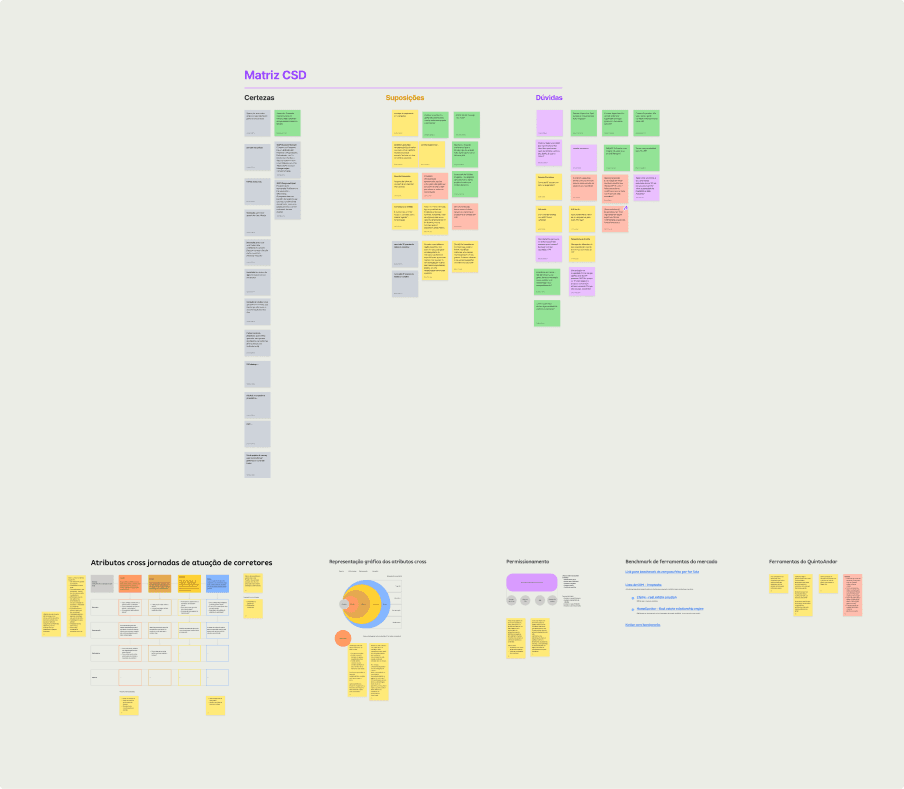
Framing the problem: We conducted workshops to align everyone and identify our biggest challenges.
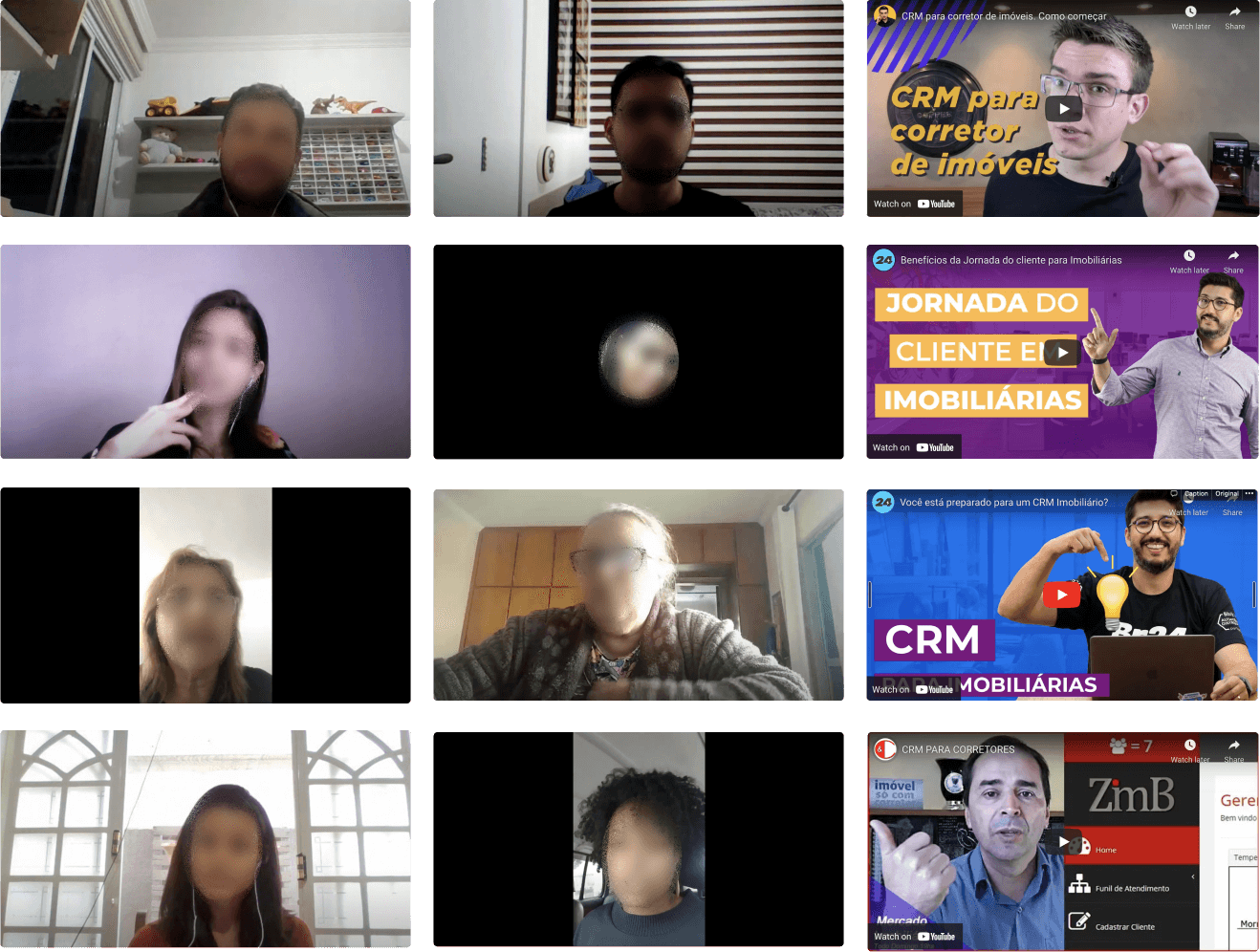
User interviews and more: We conducted remote user interviews and reviewed YouTube videos on becoming a better realtor.
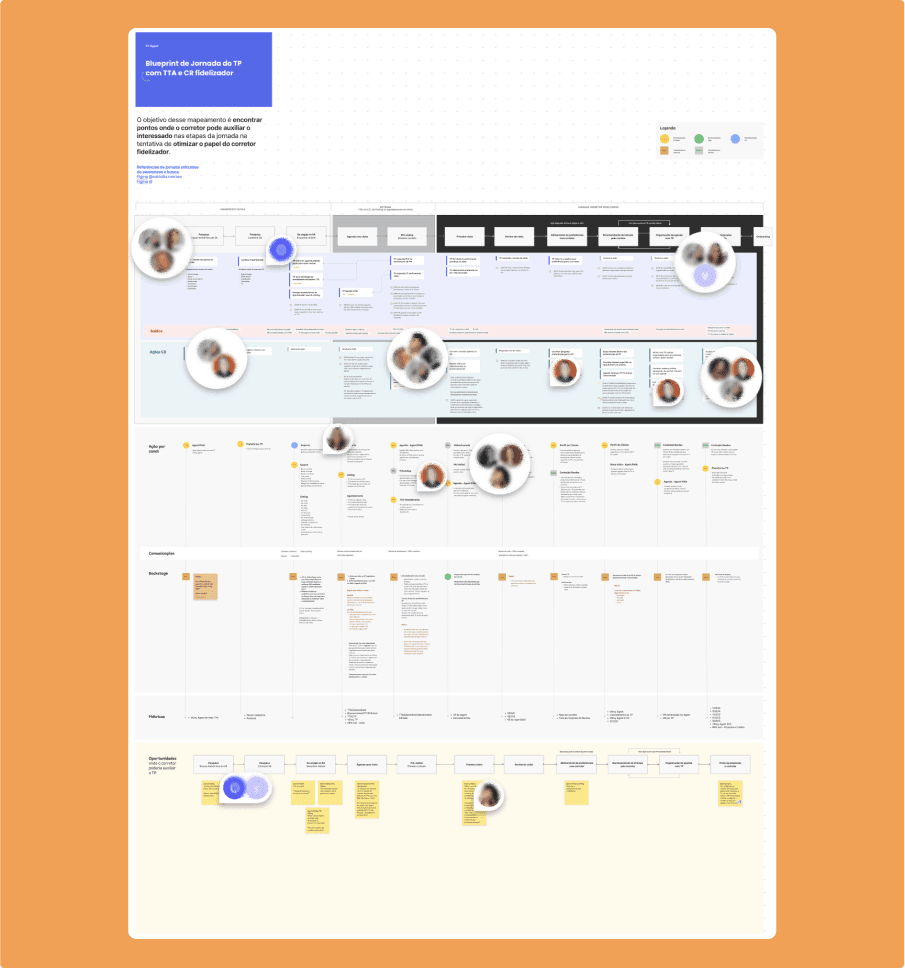
Service blueprint: We mapped the journey of agents and tenant prospects, and analyzed our product's main behaviors. By aligning interview inputs and quantitative data, we identified where the problems were.
Definition
We gathered all the information, defined the mental models of the top performers, identified the main Jobs to Be Done (JTBD), and created a service blueprint to identify the main pain points and opportunities.
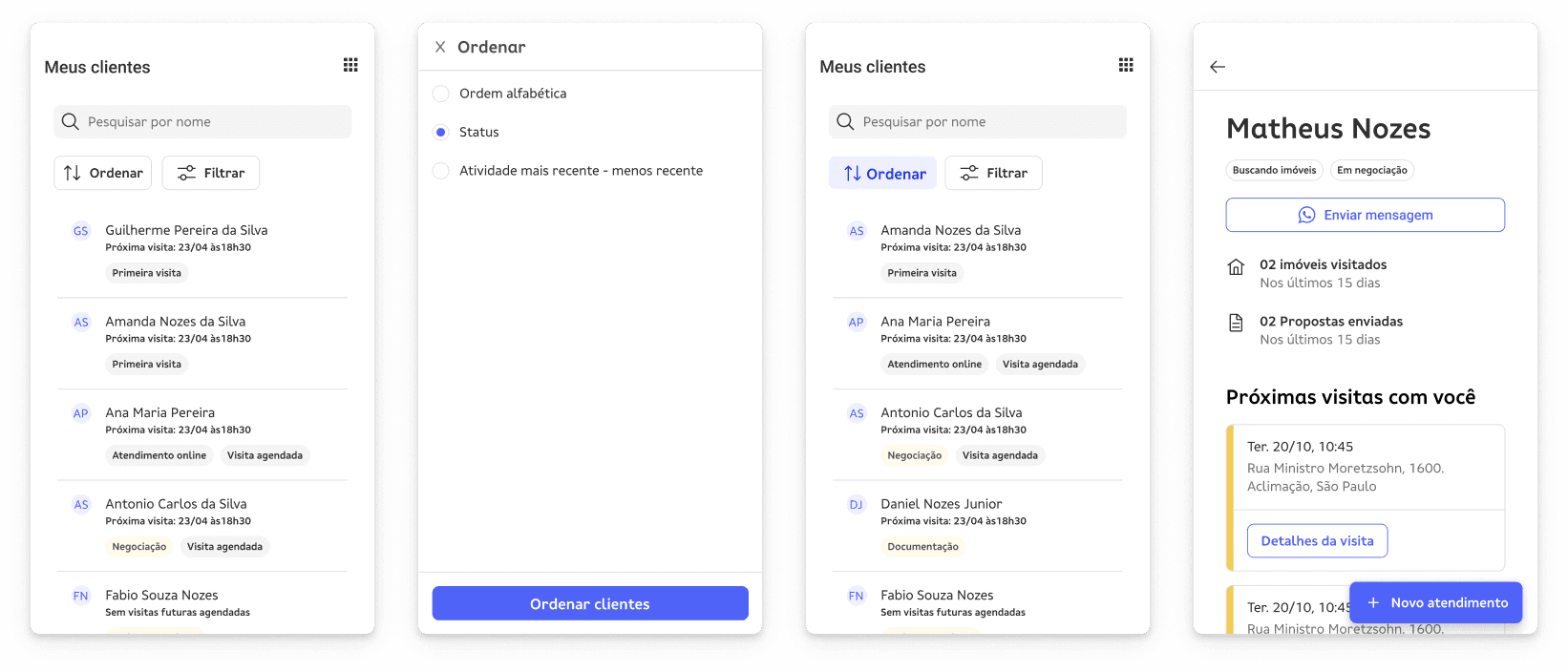
First prototype: This initial prototype included filters, a full client list, and a user profile with highlights, visits, and properties.
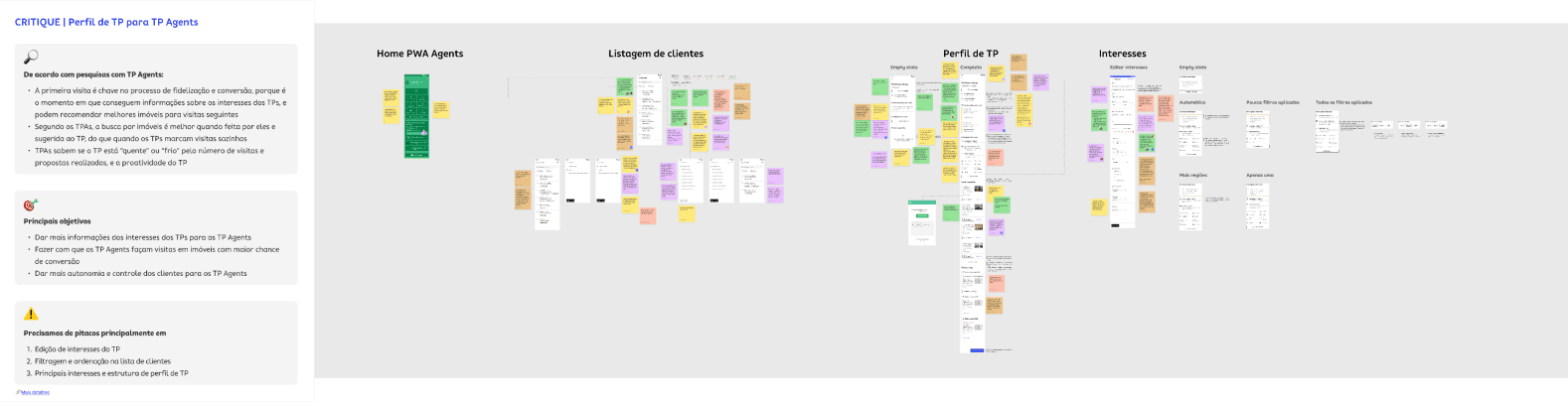
Design critique: Conducted with several designers working in similar contexts to refine ideas and identify useful elements for our team.
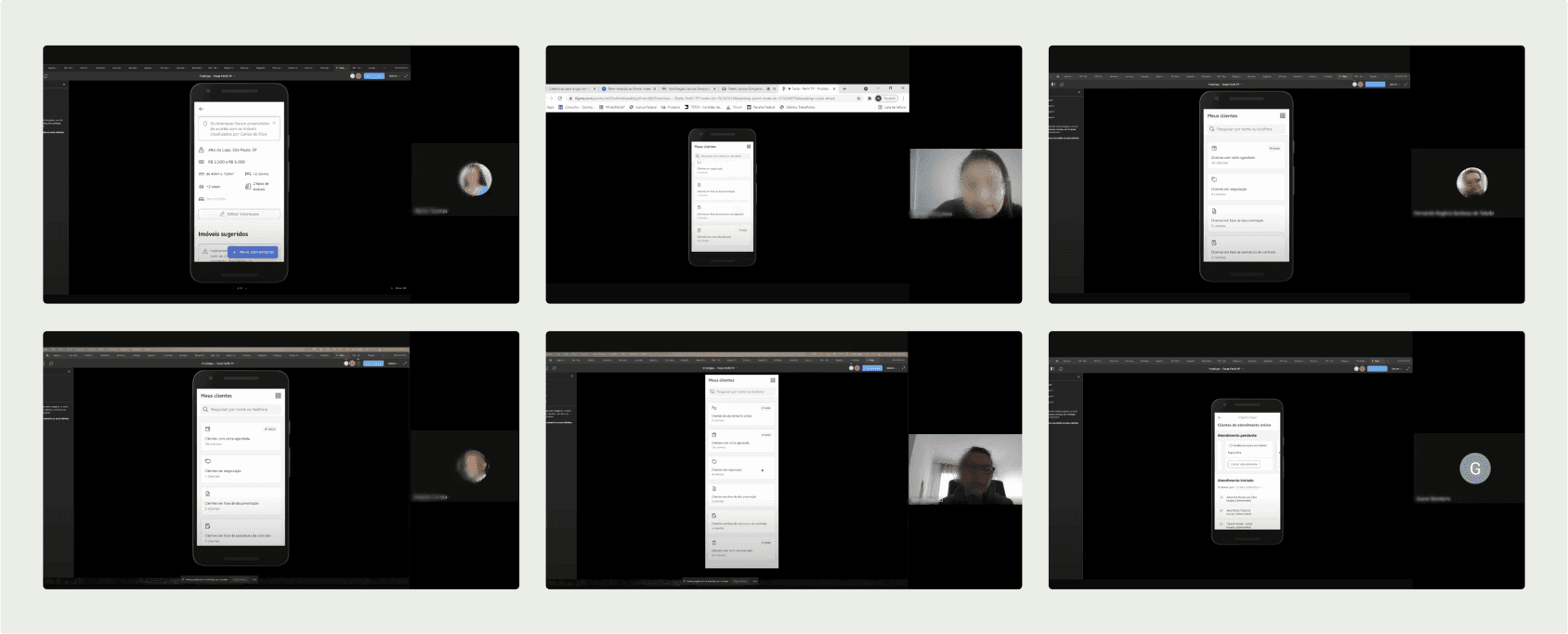
Usability testing: We received positive feedback on the client status division and the ability for agents to view their clients.
Solution
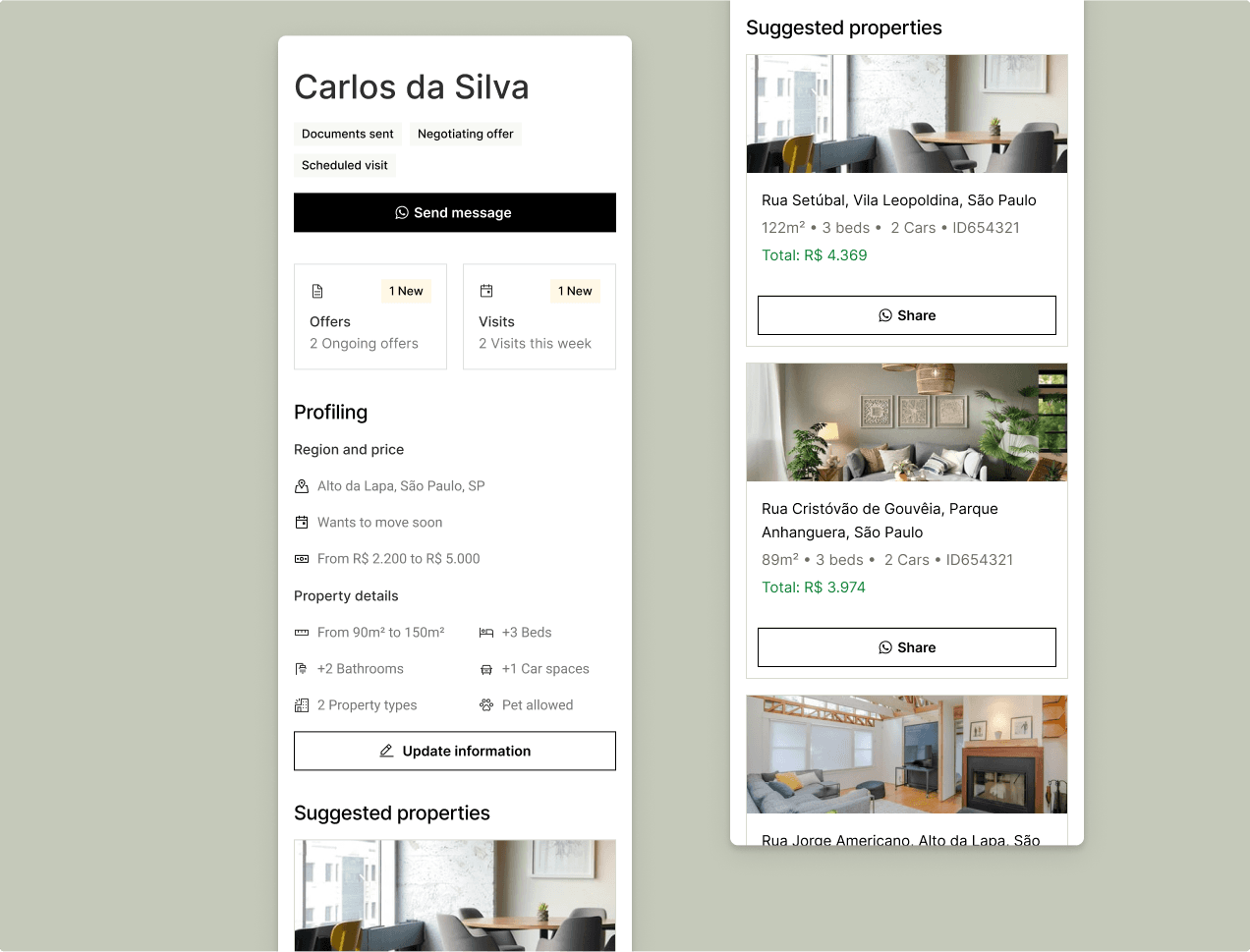
We created a section where agents could view clients according to their journey steps. Additionally, we developed a 'client profile' feature for detailed client information. To refine the main features, we tested them with users.
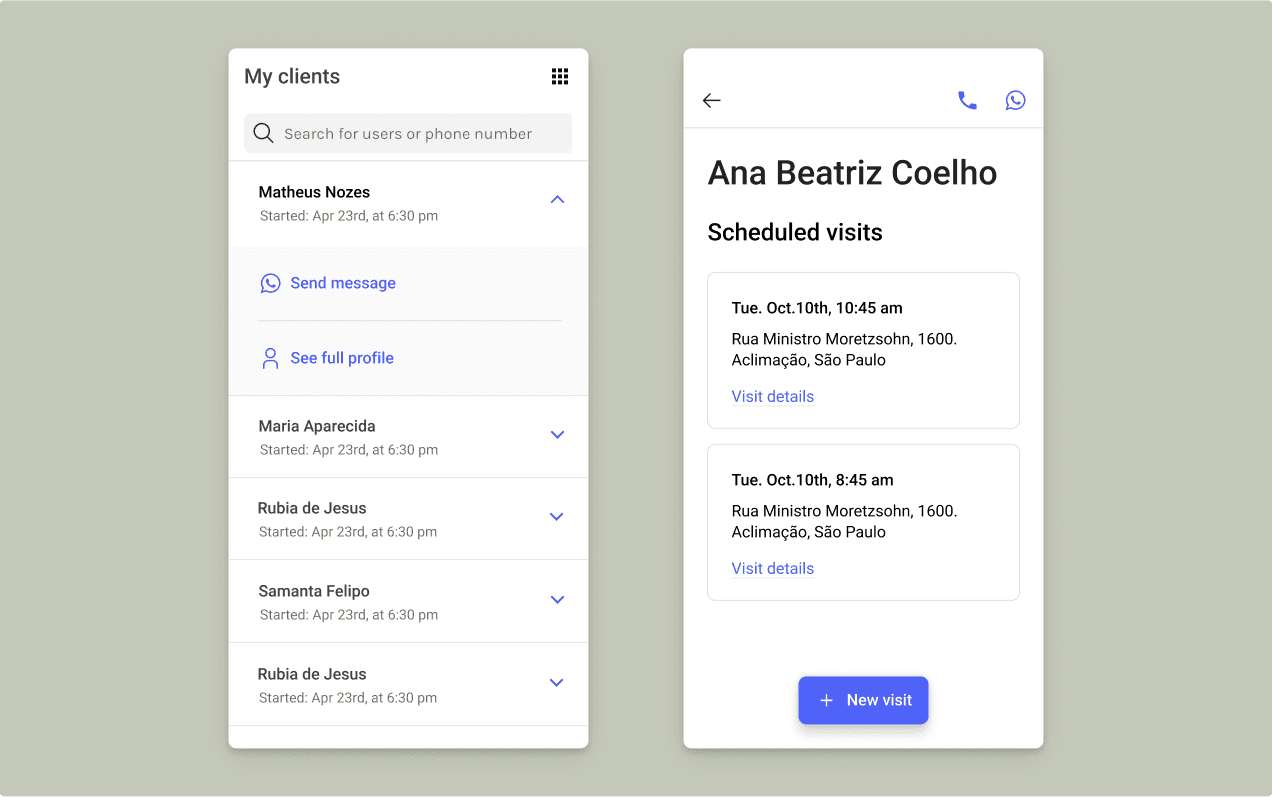
First iteration
The MVP was a simple list of all clients and a basic view of client details, using existing app components. This was a 'quick win' to deliver something useful to users while we worked on the back-end.
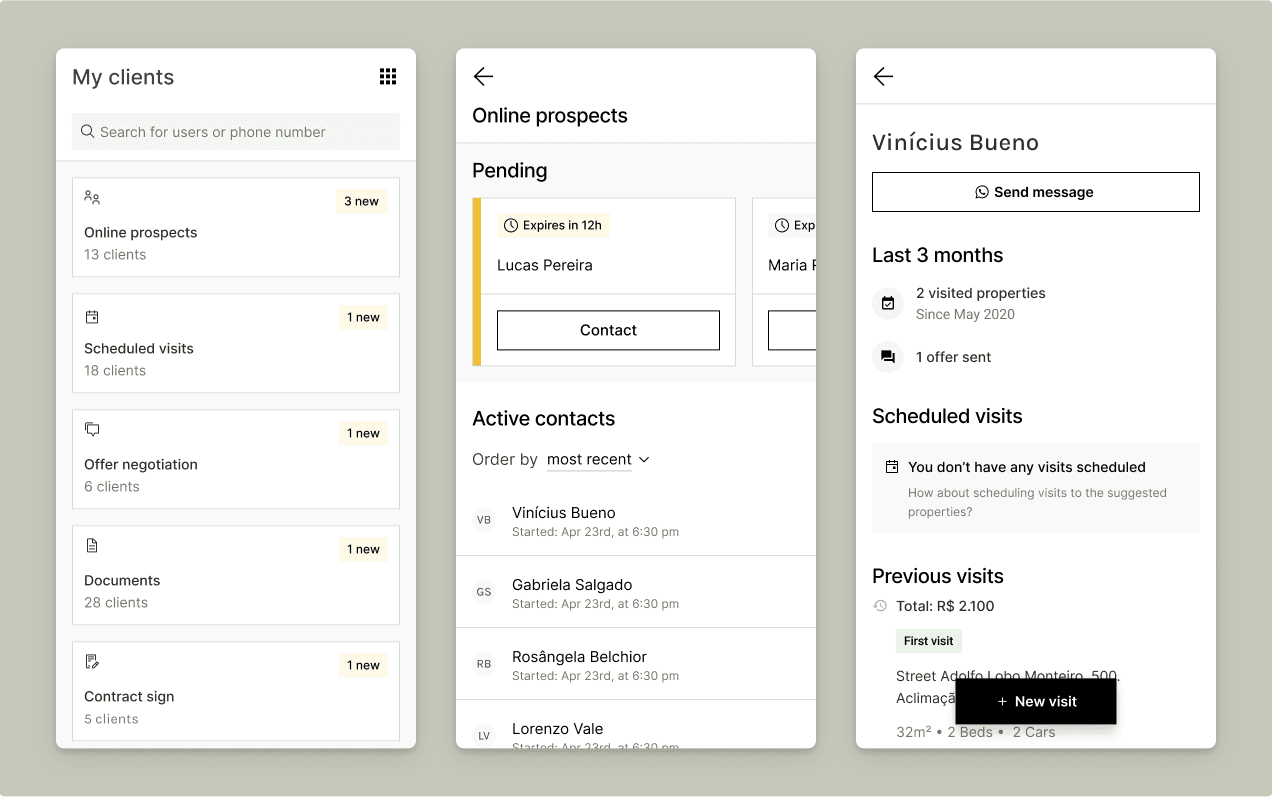
Full version
Clients were divided by status, with a more detailed second-level list based on context, and an improved user profile featuring active information.
Future vision
Our future goal was to apply the new branding and develop a comprehensive profiling feature using a machine learning model to share listings based on lifestyle.
Results
Service ratings from tenant prospects increased by 280%, primarily among agents who were previously low performers.
Additionally, we saw improvements in agent satisfaction and an increase in signed contracts.